Technology plays a central role in STEM education, with students relying on computers, laboratory equipment, simulation software, and advanced training tools every day. Modern learning environments depend on stable electrical infrastructure to support these resources and maintain uninterrupted instruction. Educational facilities often work with professionals such as an electrician Delaware County PA when assessing the readiness of their electrical systems for evolving educational demands.
Science, technology, engineering, and mathematics programs have expanded significantly over the past decade. Technical schools, colleges, and vocational training centers increasingly incorporate hands-on learning experiences that require specialized equipment. As educational technology becomes more sophisticated, reliable electrical systems have become a critical component of successful learning environments.
The Growing Reliance on Technology in STEM Education
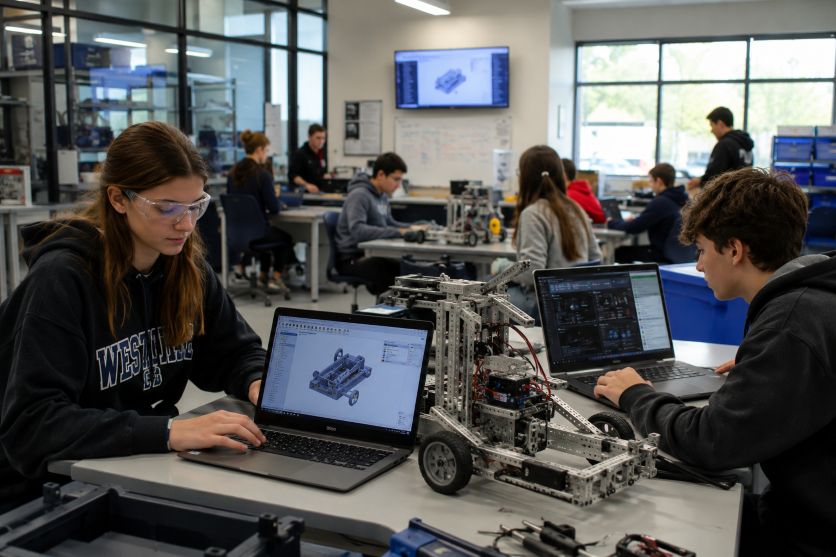
Digital technology has transformed how students learn and how instructors teach. Interactive displays, virtual laboratories, computer-aided design software, robotics systems, and advanced manufacturing equipment are now common features in many STEM classrooms.
UNESCO notes that digital technologies continue to reshape educational delivery worldwide, creating new opportunities for learning while increasing the need for dependable infrastructure. Research shows that schools with access to modern technology can provide more engaging and practical learning experiences.
Students studying engineering may use computer simulations to test designs before building prototypes. Future healthcare professionals often train using virtual reality platforms and digital diagnostic equipment. Technical education programs frequently rely on automated machinery that mirrors real workplace environments.
Each of these educational tools depends on consistent electrical power. Even short interruptions can disrupt lessons, affect research activities, and delay project completion.
How Electrical Systems Support Modern Learning Environments
Electrical infrastructure serves as the foundation for nearly every technology used in STEM and technical education settings. While students and instructors may focus on the visible equipment, many supporting systems operate behind the scenes.
Laboratories and Research Facilities
Scientific laboratories require dependable electrical service to operate microscopes, testing instruments, environmental chambers, and data collection systems. Many experiments run for extended periods and can be affected by unexpected power interruptions.
The National Science Foundation highlights the importance of reliable research infrastructure in supporting scientific discovery and education. Stable electrical systems help maintain consistent operating conditions for sensitive equipment.
Technical Workshops and Training Centers
Vocational and technical programs often include equipment such as welding stations, machining tools, manufacturing systems, and industrial automation devices. These environments place significant demands on electrical networks.
Proper power distribution allows students to train on equipment that closely resembles what they will encounter in professional settings. Reliable electrical service also supports safety systems designed to protect students and instructors.
Simulation and Digital Learning Platforms
Simulation technology has become a valuable educational tool across many disciplines. Flight simulators, engineering modeling software, cybersecurity training platforms, and healthcare simulation systems all require uninterrupted electrical support.
EDUCAUSE, a nonprofit focused on technology in higher education, reports that digital learning environments continue to expand across colleges and universities. These systems depend on stable power, networking equipment, and supporting infrastructure to function effectively.
The Risks of Inadequate Electrical Infrastructure
As educational technology advances, older electrical systems may struggle to keep pace with increasing demands. Facilities that were designed decades ago may not have anticipated the power requirements of modern STEM programs.
Several challenges can arise when electrical infrastructure falls behind educational needs.
- Frequent power interruptions affecting instructional time
- Overloaded circuits causing equipment shutdowns
- Insufficient capacity for new laboratory technology
- Higher maintenance costs due to aging systems
- Potential safety concerns related to outdated components
The U.S. Department of Energy notes that aging building infrastructure can reduce operational efficiency and increase maintenance challenges. Educational institutions face similar concerns when electrical systems are not upgraded to meet current demands.
Unexpected outages can have consequences beyond temporary inconvenience. Students may lose unsaved work, laboratory experiments may be interrupted, and scheduled training activities may need to be postponed. These disruptions can affect educational outcomes and reduce the effectiveness of learning programs.
Facilities with specialized technical equipment face additional risks. Precision instruments, computer servers, and automated systems often require stable voltage and proper power quality to operate correctly.
Preparing Educational Facilities for Modern Demands
Addressing electrical challenges requires a proactive approach. Educational institutions often evaluate their infrastructure as part of broader facility planning efforts.
Electrical assessments help administrators understand current system capacity and identify potential limitations. These evaluations can reveal opportunities for improvements before problems affect students and staff.
Professionals with expertise in commercial and institutional electrical systems contribute valuable insight during planning and modernization projects. Their work may include evaluating power distribution systems, reviewing safety requirements, and recommending upgrades that support future growth.
Facility readiness involves more than simply adding new outlets or circuits. Effective planning considers future technology adoption, equipment expansion, energy efficiency goals, and long-term maintenance requirements.
Experts note that educational institutions benefit from infrastructure strategies that align with academic objectives. Reliable power systems help create learning environments capable of supporting innovation and technological advancement.
Emerging Trends Shaping Technical Education Environments
Several emerging trends are expected to increase the importance of dependable electrical infrastructure in education.
Advanced Manufacturing Education
Many technical schools now offer training in automation, robotics, and smart manufacturing. These programs require sophisticated equipment that depends on stable electrical systems.
The Manufacturing Institute reports ongoing demand for workers with advanced technical skills, encouraging educational institutions to expand training opportunities in these fields.
Artificial Intelligence and Data Science Programs
AI and data analytics programs rely heavily on computing resources. High-performance workstations, servers, and cloud-connected systems create additional infrastructure requirements. As educational institutions expand these offerings, many are also exploring curated education hubs that improve learning efficiency, helping students access organized resources while reducing the time spent searching for relevant information. Together, these digital tools create more streamlined and effective learning experiences.
As these programs grow, educational facilities may need enhanced electrical capacity to support expanding technology ecosystems.
Sustainability and Energy Education
Many schools are integrating renewable energy technologies into their curricula. Solar energy systems, battery storage demonstrations, and smart building technologies provide practical learning opportunities while introducing new electrical considerations.
The International Energy Agency emphasizes the growing importance of energy-related education as countries pursue sustainability goals. Educational facilities increasingly serve as both learning environments and demonstrations of modern energy technologies.
Conclusion
Reliable electrical systems have become essential to the success of modern STEM and technical training programs. Laboratories, workshops, simulation platforms, and digital learning tools all depend on stable infrastructure to support educational objectives.
Growing technology adoption continues to increase the demands placed on educational facilities. When infrastructure keeps pace with these changes, institutions are better positioned to provide effective learning experiences, support innovation, and prepare students for future careers.
Thoughtful planning, regular assessments, and ongoing modernization efforts help ensure that educational environments remain ready for evolving technological needs. As STEM education continues to advance, dependable electrical systems will remain a critical foundation for learning, research, and workforce development.
Read More






 It is common for young people, especially young boys to be fascinated by big trucks, often imagining themselves as the driver of a big rig as a future profession. Actually, driving a big truck while covering long distances has great appeal to free-spirited people, who prefer not to be tethered to monotonous workplace environments. However it should not come as a surprise that becoming a driver of big trucks denotes taking on big responsibilities. That being the case, a high school diploma and informal training on how to drive a big truck is not enough.
 First off, one has to undergo and pass written exams and actual testing of an applicant’s knowledge and skills in truck driving. Passing the tests is crucial to receiving the most important requirement of becoming a professional truck driver – the Commercial Driver License (CDL).
 It’s common for prospective drivers to attend a driving school that specifically provides courses teaching federal laws and state regulations for interstate truck driving. Students also receive actual, hands-on truck driving lessons on how to manoeuvre big trucks and other large vehicles, not only on highways but also across crowded streets.
 While towing companies like Towing Service San Jose are available to help motorists, it is imperative that you make certain that your vehicle is well-maintained as well as strive to improve your driving skills in order to avoid car troubles or breakdowns. As a car owner, it is important that you
 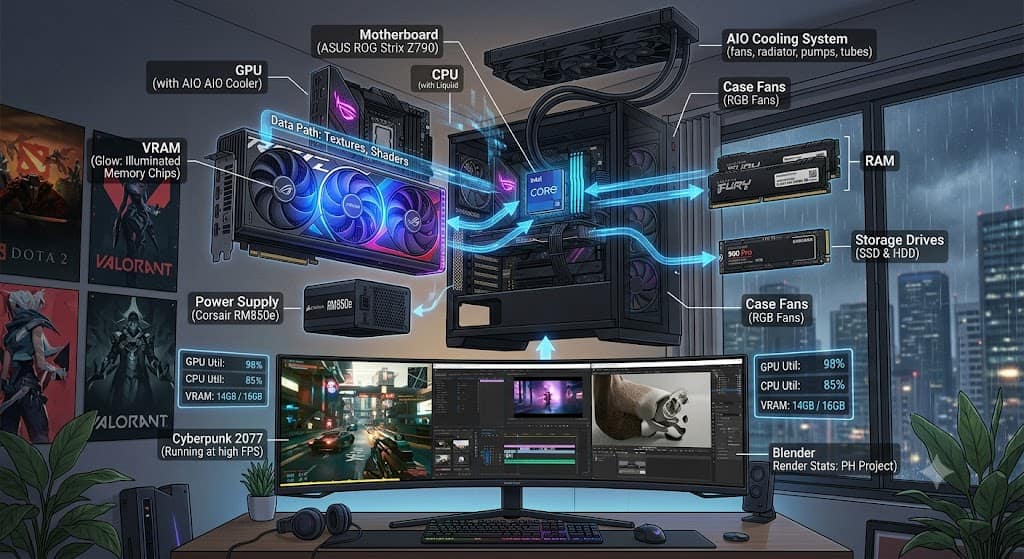 graphics card. Unlike system RAM, which is shared among all running applications, VRAM is reserved exclusively for graphics processing. The GPU uses VRAM to store essential graphical data, including:
 Knowledge leaves a deeper mark when it’s written on the skin. Across cultures and centuries, tattoos have symbolized identity, faith, and memory. For many men today, body art has become a personal classroom—one where lessons from books, philosophy, and science find a permanent place. These tattoos speak of wisdom earned, questions explored, and ideas that never fade.

 Students spend an average of 7 to 10 hours a week searching for reliable academic resources online. This time could be better spent studying or practicing their skills. With the flood of information on the internet, finding accurate and relevant material often feels like looking for a needle in a haystack. Curated education hubs aim to solve this by organizing verified resources in one accessible place.


 Using music boxing machines also helps students’s coordination, balance, and rhythm to get better. Students engaged in sports or other pursuits requiring certain abilities may find this helpful.


 Coding is not just about writing code; it’s also about debugging and problem-solving. In the game, you will encounter bugs and errors that require careful analysis and troubleshooting. By learning to debug and fix issues in the game’s code, you develop valuable problem-solving skills that are crucial in real-world programming scenarios.


 Vigilant protection and safety of people should be the main focus of security monitoring perth restaurants install within and around the vicinity of their establishment. That is why Australia’s licensing department might require licensed business premises to use CCTVs in ensuring a secure and safe environment. Moreover, the monitoring system must follow guidelines prescribed under AU’s framework for CCTV Strategy.
 In 2015, and in order to ensure the optimised use of CCTV cameras as monitoring and security components, the WA government published the State CCTV Strategy. Since then, this serves as clear guidelines on how to best use CCTV cameras in enhancing the security and safety of WA communities. Actually, during the said year, all AU state governments had implemented frameworks for CCTV installations. The initiative was in line with Australia’s plans for the future use of emerging advancements in
  Technology has become an integral part of our lives, and it has transformed the way we learn and educate ourselves. With the facts about tech and advent of new digital technologies, the traditional classroom model is being challenged and reimagined. Today, students have access to online resources, virtual classrooms, and interactive learning tools that enhance their educational experience. In this blog post, we will discuss the role of technology in revolutionizing education and how it is changing the way we learn.

 Online learning with its convenience and accessibility it provides, students can now pursue education from anywhere in the world. However, with the rise of online learning comes the need for effective web design. Good web design can make all the difference in creating a positive online learning experience for students.
 Instagram has become an essential platform for individuals and businesses to share visual content and engage with a global audience. Instagram boasts a billion users active every month, and educators are taking advantage of this platform to